What Villa Carlotta Taught Me About Beauty | Lake Como

I expected to admire a beautiful villa.
Instead, I left thinking about what beauty really is.
I think ancient places change the way we behave.
Without anyone asking us to, our voices become quieter. We walk more slowly. We notice details we'd normally miss.
Somewhere between the entrance gates and the front door of Villa Carlotta, I realised I was no longer simply visiting a villa.
I had become its temporary custodian.
What struck me wasn't perfection.
It was permanence.
Not the immaculate gardens, although they are beautifully maintained, nor the grandeur of the villa itself. It was the quiet confidence of a place that has stood through centuries of changing lives. Trees that have quietly watched generations come and go. Stone balustrades softened by time. Sculptures that have occupied the same corners for longer than most of us can truly comprehend.
There is something deeply reassuring about knowing that some beautiful things outlive all of us.
It makes you want to protect them.
Not by touching them, but simply by treading lightly through them, grateful that someone before us cared enough to preserve them, and hopeful that someone after us will do the same.
Villa Carlotta facade Lakeside terrace Upper gallery
One thing I rarely do before visiting somewhere is too much homework.
I rather like arriving slightly ignorant.
It leaves room for surprise.

Villa Carlotta rewards that kind of curiosity beautifully. Rather than lengthy information panels, each room has a single interactive guide, rather like an iPad waiting quietly in the corner. With a swipe of your finger, you can explore the artwork, the artist, the collector and the little curiosities behind each piece. It feels wonderfully intuitive and, perhaps more importantly, encourages you to spend a little longer looking.
The first sculpture that truly stopped me was Cupid and Psyche.
One of the displays invited visitors to describe the sculpture in a single word.
Mine was poetic.
Not because poetry always speaks of happiness, but because it allows romance and melancholy to exist together. The sculpture felt impossibly gentle. Marble that somehow appeared soft. It spoke of tenderness, longing and quiet devotion all at once.
The following rooms introduced paintings on a scale that is almost unimaginable today.
We have become accustomed to hanging artwork above sofas.
These are the sort of works that require a room to be built around them.
One, in particular, held me longer than the others: The Last Kiss Given to Juliet by Romeo.
Perhaps it was because I was already in a romantic frame of mind after Cupid and Psyche, but there was something quietly moving about Hayez's interpretation. Less theatrical than I expected. More intimate. A fleeting moment suspended forever.

The adjoining room had my head tilted upwards, much like Juliet's, although for an entirely different reason.
The ceiling.
It is one of those ceilings that refuses to be ignored. Every glance reveals another extraordinary detail. Every corner rewards your attention.
If ever maximalism were to win me over, it would begin here.
The next room drew me in for an entirely different reason.
Not marble.
Not paintings.
A tapestry.
At first, it was simply the scale that stopped me. Stretching across the wall, it was less something you looked at and more something you stepped into.
Then the stories began to emerge.
There were villagers celebrating, a little too enthusiastically by the look of it. Figures tucked into corners. A couple seemingly oblivious to the festivities around them, absorbed instead in what looked suspiciously like an argument. Every few moments another tiny detail revealed itself, and with it another smile.
It reminded me why I so often encourage people to choose art that rewards repeated viewing.
Some pieces make an immediate statement.
Others quietly unfold over time.
This tapestry belonged firmly in the second category.
As I stood there, I found myself imagining it not in a museum but in a long dining room where family dinners linger into the evening. It would be one of those rare pieces that never runs out of conversation. Every guest would notice something different. Every visit would reveal another detail that had somehow escaped you before.
Perhaps that's the hallmark of truly great art.
It doesn't simply decorate a room.
It continues the conversation long after everyone has stopped talking.
As I wandered from room to room, another thought began to form.
Giovanni Battista Sommariva wasn't simply collecting art. He was investing in the artists of his own day. Many of the sculptures and paintings that now draw visitors from around the world were contemporary works when he acquired them. He believed enough in living artists to commission them, champion them and give them a place in his home.
It made me wonder who today's Sommarivas might be.
We often talk about collectible design, limited editions and collector's pieces. We furnish our homes with work by emerging ceramicists, furniture makers and artists, hoping not only to live with something beautiful but also to support the people creating it.
Perhaps the desire hasn't changed all that much in two hundred years.

That thought stayed with me as we wandered through the gardens towards the exit.
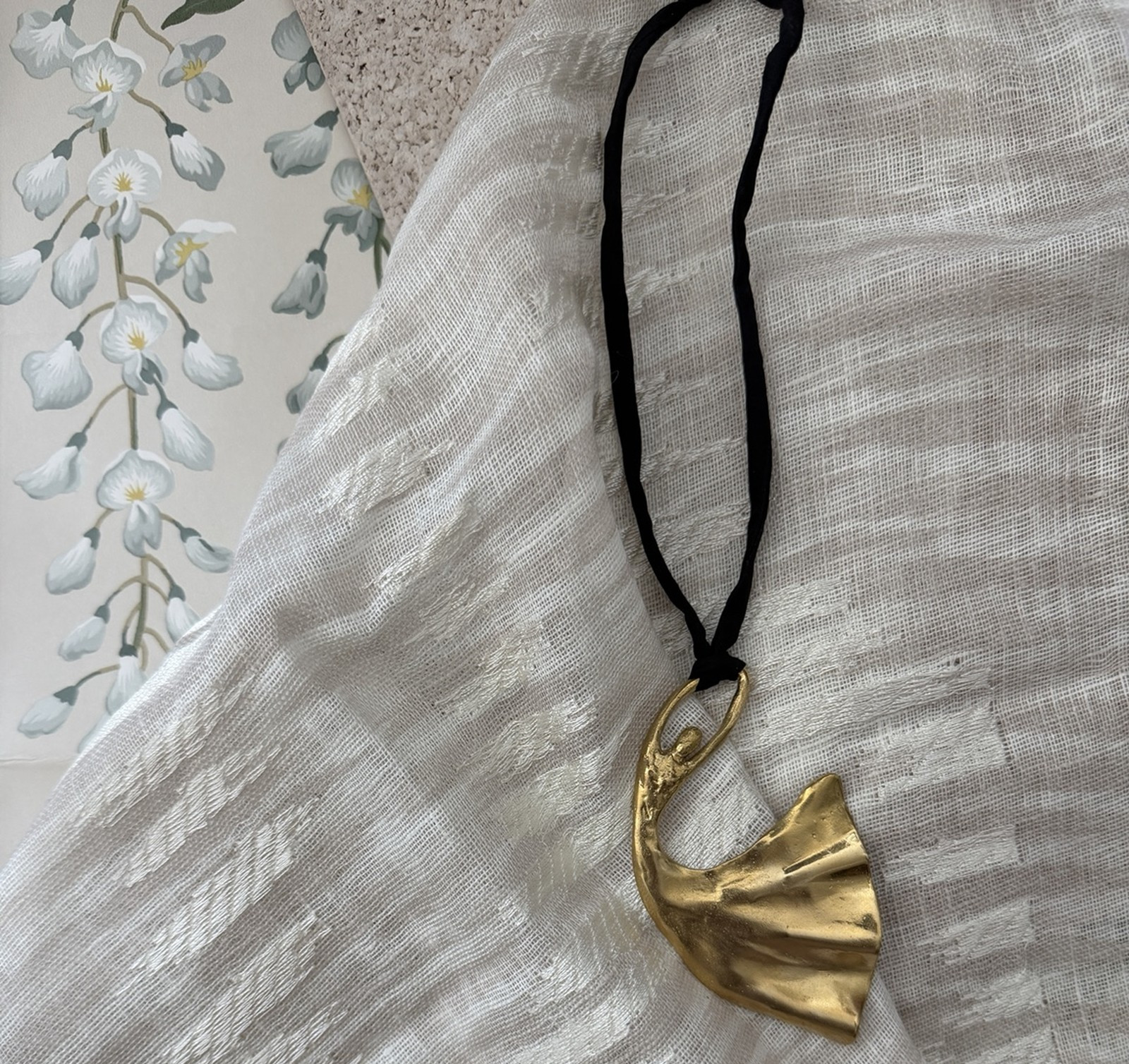
Tucked away in one of the little garden buildings was Veronica Di Francesco of Arkè Art & Design, exhibiting her handcrafted brass jewellery. Her pieces couldn't have been more different from the marble sculptures inside the villa, yet somehow the connection felt obvious. Here was another artist, creating sculptural work in brass that felt entirely at home in this setting. Although unmistakably contemporary, her pieces shared the same appreciation for craftsmanship and form that had been celebrated throughout the villa.
Somehow, it felt like the perfect way to remember my visit to Villa Carlotta.
Every masterpiece we admire today was once the work of a living artist, quietly hoping someone would recognise its worth.
If You Go
If you're planning a visit to Villa Carlotta, here are a few things worth knowing before you go.
How long should I allow?
Allow around three hours if you'd like to explore both the villa and its magnificent gardens without feeling rushed.
Is Villa Carlotta worth visiting?
Absolutely. Villa Carlotta is one of the most rewarding historic villas on Lake Como. While many visitors come for the spectacular botanical gardens, don't overlook the villa itself. The remarkable collection of sculpture, paintings and tapestries is every bit as memorable.
Should I arrive by ferry or car?
If you're already exploring Lake Como by ferry, it's the easiest and most enjoyable way to arrive. The ferry terminal is only a short walk from the entrance.
Continue Exploring
London Design Inspiration: A Storybook of Interiors, Theatre and Personal Style
The Best Vintage Shopping in Lake Como: My Favourite Antique Shops, Thrift Stores & Markets, and How I Styled My Finds
Subscribe to Design Notes
If you've enjoyed this journal entry, I'd love to welcome you to Design Notes.
Subscribers receive my monthly Design Notes newsletter, along with email notifications whenever a new Journal article is published, so you'll never miss a story.
Location: Villa Carlotta, Tremezzo, Lake Como, Italy
Highlights: Historic villa. Botanical gardens. Antonio Canova. Francesco Hayez. Giovanni Battista Sommariva. Monumental tapestries. Lake Como
Design Notes: Allow yourself time to wander slowly. Villa Carlotta isn't simply about seeing great art. It's about noticing how architecture, landscape, craftsmanship and centuries of careful stewardship come together to create a place that still feels quietly relevant today.
Photography: Photography by Lyn Cowie